
Why Yak Clothing Is So Warm And Soft
What yak wool is, how warm it keeps you, why it does not itch and how long a sweater lasts.
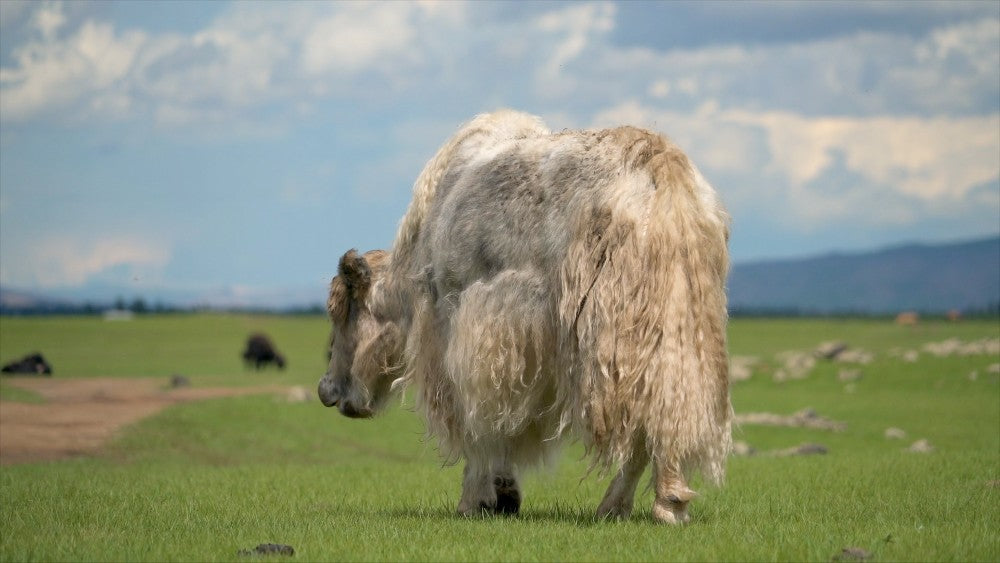
What Is Yak Clothing?
Wool comes in many different forms with different feel and function.
Animals in the families of sheep, goats, yak, camel, and even ox produce a fiber broadly called “wool”.
No synthetic comes close. Wool is the best-performing material we know of, and khullu is the finest of it.
Khullu, the foundation of our yak wool clothing, comes from the soft underbelly fibers that insulate yaks through the cold winter.
Our materials helped us make both a warm and highly breathable sweater.
| Yak Wool (Khullu) | Polyester And Other Synthetics | |
|---|---|---|
| After Days Of Wear | 66% less odor, so you can wear it again tomorrow | Holds odor, so it needs a wash after every wear |
| When You Sweat | Soaks up sweat and still feels dry, so you do not feel clammy | Absorbs almost none, so sweat sits on your skin |
| After A Season Of Wear | Springs back after stretching, so cuffs and elbows keep their shape | Stretches and stays stretched, so it bags out |
| When You Are Done With It | Breaks down in a few months, so nothing is left behind | Can sit in a landfill for an estimated 200 years after you are done with it |
How Warm Is Yak Clothing?
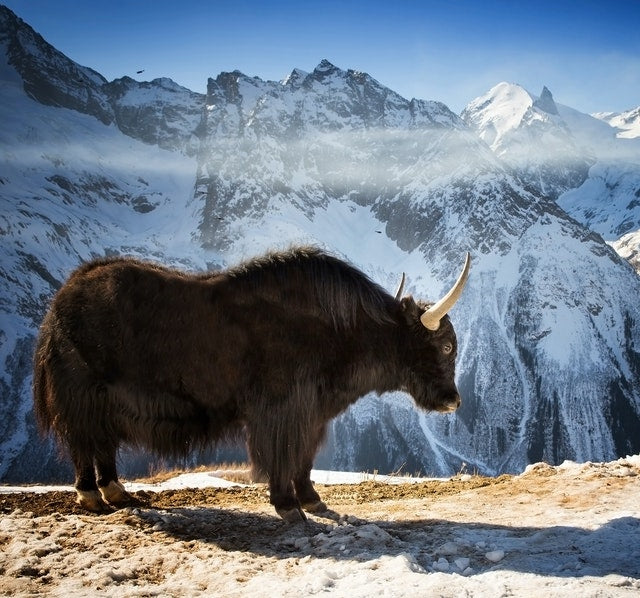
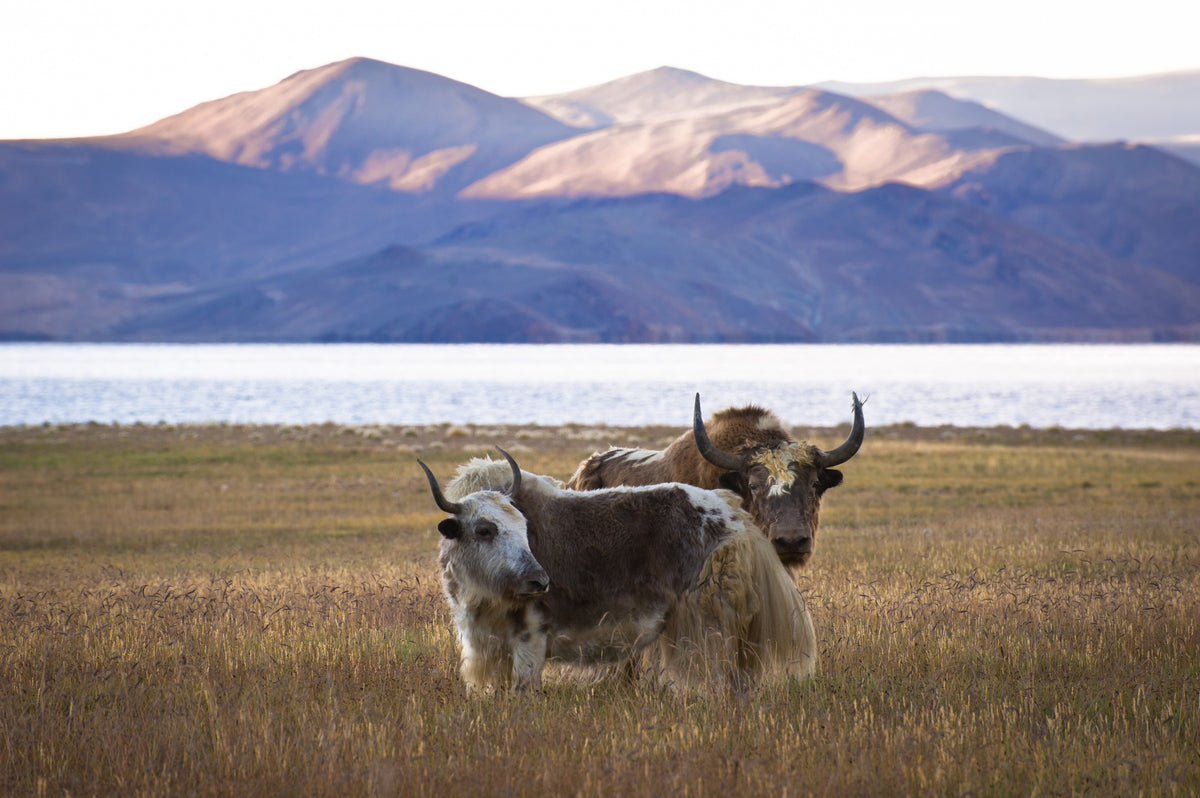
Yaks grow a thermoregulating fiber called khullu, and they live in a high-elevation climate that swings from -40°F in winter to 90°F in summer, so the same fiber keeps you warm in the cold and cool in the heat.
Unlike human hair, wool has crimps, which are natural “waves” in the fiber that trap air to insulate in extreme cold and wick away vapor to cool in extreme heat.
Wool can be regarded as an ‘active’ fiber, which keeps body temperature at an equilibrium. It efficiently transfers water vapor from sweat in and away from the body as temperatures change.
In fact, as wool transfers water vapor, a chemical reaction occurs that produces heat.
Even the desert-living Bedouins wear lightweight wool clothing like ours to keep themselves cool.

Is Yak Wool Itchy?
No. Whether a wool itches comes down to how fine the fiber is. Coarse fibers are stiff enough to prick the skin, while finer ones bend against it.
Wool starts to feel soft below 20 microns. Khullu measures around 17.5 microns, inside the 14 to 19 micron band that Grade A cashmere occupies, so a yak wool sweater can go straight on over bare skin.

Does Yak Clothing Hold Odor?
No. Wool pulls sweat off the skin before bacteria can turn it into odor, so a yak sweater stays fresh after days of wear.
Wool is antimicrobial, and that starts with the material’s wicking properties. To regulate body temperature, humans can sweat several liters a day.
All this sweat can get pretty smelly, right? In fact, sweat only becomes odor if it isn’t wicked away.
Wool has a number of unique moisture management properties that allow it to resist body odor, making it ideal for #repeat wear and simplifying your life.
Saturation regain: wool can absorb and retain up to 35% of its own weight in moisture and still feel dry to the touch, which reduces sweat buildup and discourages bacterial growth.
Isolation of bacteria: after sweat is absorbed from the skin’s surface, it travels outward, where it evaporates. In the process, wool actively binds and isolates bacteria within its fiber.
The isolation of bacteria reduces odor to the point where unwashed wool has 66% less odor intensity than plastic-based fibers and 28% less than cotton fabrics (Woolmark).
Fun fact: bacteria thrive in humid environments, where sweat is trapped instead of being wicked away. For example, while a 1x1cm area on a human forearm contains around 100 bacteria, an identical square in the armpit contains on average 10 million bacteria (Popular Science).
The odor-resistant properties of wool allow clothing to be washed less and worn more, and it stays fresh even after the 10th wear. You may travel with wool layers for just this reason.


How Long Does Yak Clothing Last?
For years of regular wear, and often for decades when a sweater is well made. The reason is the way a wool fiber is built.
The crimps in wool are akin to a molecular coil spring. The fibers naturally expand and contract according to their environment.
The crimps allow wool fibers to be stretched up to 50% of their length when wet and 30% when dry and still bounce back to their original shape, so a sweater keeps its fit at the cuffs and elbows.
The flexibility gained from wool crimps makes the fiber more durable. A wool fiber can be bent back on itself more than 20,000 times before it breaks, against about 3,000 for cotton and 2,000 for silk (American Wool). That is what holds a sweater together wash after wash.
Is Yak Wool Sustainable?
Compared to both synthetics and many cellulose-based fibers, wool is far more sustainable.
Wool is a 100% regenerative material, which is in many cases naturally shed. Being a natural material, wool biodegrades in just a few months vs. up to an estimated 200 years in the case of plastic-based fibers.
Wool is also self-cleaning, meaning it will release bacteria and odor even in a cold wash, which is great news because 25% of the carbon footprint of clothing comes from its lifespan of care (Fashion Revolution).
What Yak Clothing Do We Make?
Two lines, and the difference between them is how much of the year you want to wear it. Our Winter Sweaters are 100% yak wool: crew necks, cable knits, quarter zips, cardigans and a Fair Isle, plus scarves and a blanket. They are the warmest we make.
Our All-Season Sweaters are knit lighter so they carry from fall through spring without the weight. That line is more than sweaters: vests, henleys, turtlenecks, hoodies, a swing dress, a ribbed skirt, socks and a beanie.
The yak wool guide covers the fiber in depth, from the herds it comes from to how it compares with other fibers.
Warm
40% warmer than sheep’s wool, so you can wear fewer layers.
Soft
As fine as Grade A cashmere, soft enough for bare skin.
Light
The same warmth at less weight. The sweater stays thin.
Odor-Resistant
Holds far less odor than synthetics, so you can wear it for days.
Breathable
Moves sweat away from your skin, which keeps you dry.
Durable
Built to last for years of everyday wear.
Yak Clothing FAQ
How Is Yak Wool Different From Sheep’s Wool?
Yak wool is the fine down a yak grows beneath its outer hair, called khullu. It is finer than sheep’s wool and 40% warmer at the same weight, which is why a thinner sweater does the same work.
What Is The Difference Between Yak Hair And Yak Wool?
Yak hair is the coarse outer coat, too stiff to wear against the skin, so it goes into rope and tent cloth. Yak wool is the soft down underneath, and that is the part made into sweaters.
How Often Do You Need To Wash Yak Clothing?
Far less often than polyester and the other synthetics most activewear is made from, which trap sweat and usually need a wash after every wear. Aired out overnight, a yak sweater can go several days between washes. Our All-Season Sweaters are machine washable and our Winter Sweaters are hand wash.
Is Yak Wool Warm Enough For Winter?
Yes. It is the coat that gets a yak through a Himalayan winter, and our Winter Sweaters are knit heavier for the coldest months.
Does Yak Clothing Last?
It is built to. The crimp in a wool fiber works like a coil spring: it stretches up to 50% of its length when wet and 30% when dry, then returns to shape. That is what keeps a sweater from bagging out at the elbows after a season.
Is Yak Wool Waterproof?
No, and no wool is. What it does instead is keep its warmth while it is damp and dry out as you wear it, which is why a shower on the way somewhere is not the end of the day. For real rain, a shell goes over it.
Where Does Yak Wool Come From?
From the Himalayas and the Tibetan Plateau, where yaks have been herded by nomadic families for thousands of years. The down is combed out as the animal sheds in spring, so nothing is taken the yak still needs.
Every good wardrobe starts with owning less and owning better.
Shop Yak Wool
The Cardigan Vest For Every Season of Life
One vest, a toddler, a second pregnancy, and no plans to retire it.
Read more
How To Style A V-Neck Sweater
Will anyone notice if I wear this sweater all week?
Read more
Taking My Oliver Charles Sweater Halfway Around The World
My travel essential: odor-resistant and versatile, a single sweater transitions effortlessly from flights to city strolls.
Read more
Exploring Spain In My All-Season Yak Wool Sweater
Testing the durability of my sweater along the Mediterranean Sea in Costa Brava.
Read more